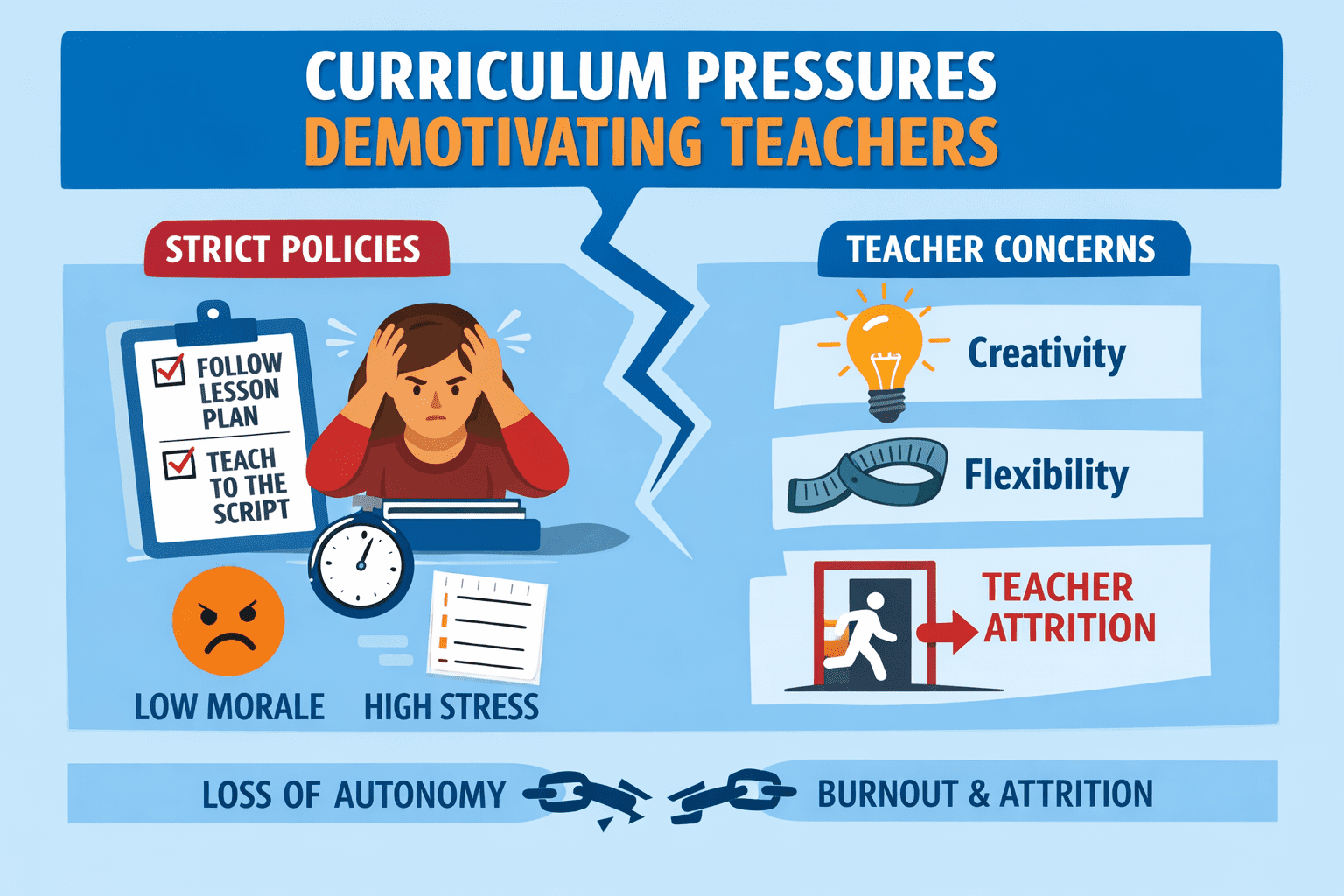
A growing body of evidence suggests that the increasing pressure on teachers to follow prescribed curriculum policies is contributing to falling morale and rising workforce attrition. A recent study has highlighted a trend many educators say they already recognise: the more tightly teaching is controlled through rigid directives, the less empowered teachers feel to do their jobs well — and the more likely they are to consider leaving the profession altogether.
At the centre of the issue is a widening gap between curriculum intent and classroom reality. Prescribed curricula are often introduced to improve consistency, raise standards, and ensure all pupils have access to the same core knowledge. In principle, these aims are widely supported. In practice, however, teachers report that strict adherence requirements can turn teaching into a compliance exercise, where meeting policy expectations becomes more important than responding to what students actually need.
Teachers frequently emphasise that creativity and flexibility are not optional extras, but essential tools of effective teaching. Lesson design relies on professional judgement: choosing examples that resonate with a particular class, adjusting pacing when pupils struggle, and using different methods to build understanding. When curriculum delivery is heavily scripted or monitored in a way that discourages adaptation, teachers can feel their expertise is being sidelined. Over time, that sense of reduced autonomy can erode job satisfaction and weaken the professional identity that keeps many educators motivated.
The study also points to the practical consequences of rigid curriculum enforcement. Teachers say that inflexible pacing guides can leave little room for revisiting difficult concepts, supporting pupils who need more time, or extending learning for those ready to move faster. Instead of allowing teachers to refine lessons through experience, strict policies may force educators into one-size-fits-all approaches that do not reflect differences in classroom dynamics, student backgrounds, or learning needs.
For many teachers, the impact is not only pedagogical but emotional. Being required to teach in a way that feels ineffective or misaligned with students can create frustration and a sense of helplessness. Educators describe feeling torn between doing what they believe is best for pupils and meeting external expectations tied to inspections, performance measures, or internal compliance checks. That tension can increase stress and contribute to burnout — a major driver of attrition in schools already facing recruitment and retention challenges.
Workforce attrition is rarely caused by a single factor, but the study suggests curriculum pressure is becoming a significant part of the wider workload and wellbeing crisis. When teachers are expected to produce extensive documentation, justify every deviation from a prescribed plan, or “teach to the policy” rather than the class, the job becomes more time-consuming and less rewarding. Early-career teachers may feel particularly vulnerable, with less confidence to adapt lessons and greater fear of being penalised for straying from set frameworks.
Teachers are not calling for the removal of curriculum standards altogether. Many support clear learning goals, shared resources, and structured progression. What they are warning against is an approach that treats curriculum delivery as a rigid script rather than a framework. They argue that the best results come when teachers are trusted to interpret curriculum objectives professionally — using their knowledge of their subject and their students to deliver learning in ways that are engaging, responsive, and effective.
The findings add to wider debates about how education systems balance accountability with professional autonomy. If policymakers and school leaders want to improve retention, teachers suggest that rebuilding trust is essential. That could mean giving educators more discretion in lesson design, reducing punitive monitoring, allowing flexibility in pacing, and recognising that high-quality teaching depends on teacher judgement, not just adherence.
Ultimately, the study’s message is clear: teachers are most motivated when they feel valued as skilled professionals, not treated as delivery mechanisms for policy. Without changes that restore creativity, flexibility, and trust in the classroom, the sector risks losing more experienced educators — and making it even harder to attract new ones.