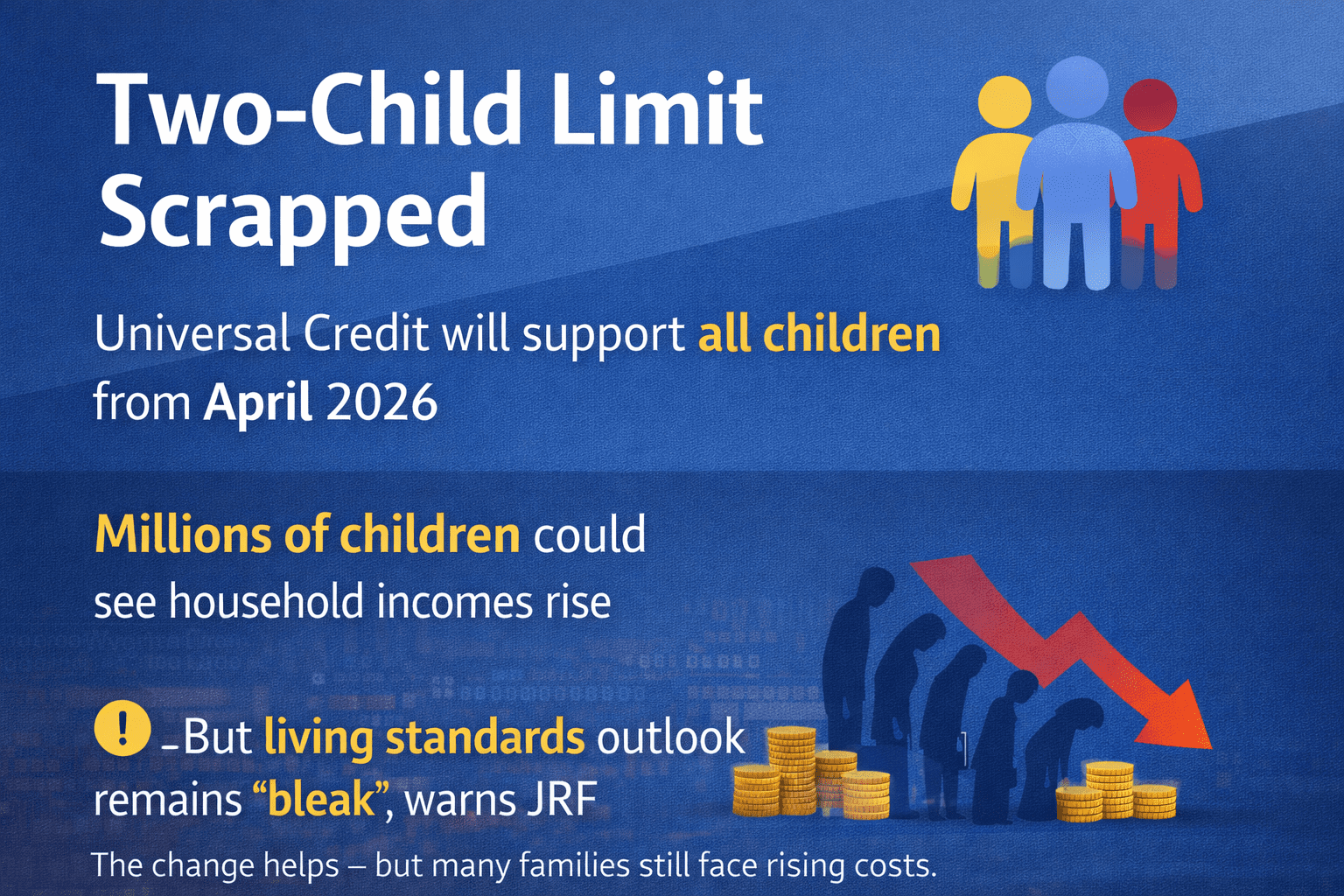
The UK Government has officially abolished the two-child limit on support through Universal Credit — a controversial policy that barred means-tested benefits for third and subsequent children born after April 2017 — in its Autumn Budget 2025. The change, which comes into effect from April 2026, is designed to boost incomes for larger families and reduce child poverty, but experts warn overall living standards remain under pressure. (Joseph Rowntree Foundation)
What Has Changed
Chancellor Rachel Reeves confirmed in her 26 November 2025 budget statement that the two-child limit will be removed from April 2026, reversing a policy first introduced in 2017 that had increasingly drawn criticism from charities and think-tanks. (Wikipedia)
According to government estimates, scrapping the limit is projected to lift around 600,000 fewer individuals out of relative low income by the end of the Parliament, including about 450,000 children, compared with scenarios where the cap remained in place. Around 2 million children will see their household incomes rise as a result of the policy change. (GOV.UK)
Impact on Families
The Joseph Rowntree Foundation (JRF) says that removing the two-child limit will significantly reduce child poverty and ease financial strain on larger families, but stresses that living standards for many households are still projected to fall over this Parliament, particularly in the lower and middle income tiers. Disposable incomes after housing costs remain under pressure from broader economic headwinds. (Joseph Rowntree Foundation)
The Resolution Foundation’s research warns that only fully scrapping the two-child limit — rather than partial adjustments — can prevent child poverty rates from rising further, and even then, additional policies are needed to tackle projected increases in child poverty by 2029–30. (resolutionfoundation.org)
Meanwhile, analysis from the Institute for Fiscal Studies highlighted that reversing the limit would reduce child poverty by hundreds of thousands and is among the most cost-effective measures to do so, though it represents only one piece of the broader welfare picture. (Facebook)
Wider Context and Ongoing Challenges
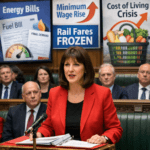
The Autumn Budget also included other cost-of-living measures, such as cuts to energy bills and freezes on regulated rail fares, aimed at reducing household costs. However, the Resolution Foundation and others caution there is still a risk of living standards falling by more over this Parliament than in any on record without further reforms. (Al Jazeera)
Experts say that while scrapping the two-child limit is a welcome step, it must be part of a broader strategy of social support, including initiatives like a protected minimum floor for Universal Credit and expanded early-years services, to ensure families can manage costs amid high housing and living expenses. (Joseph Rowntree Foundation)
What Happens Next
From April 2026, families with three or more children will be eligible for the Universal Credit child element for all children, with payments no longer limited to the first two. The change is part of the Government’s broader Child Poverty Strategy, which is due to be published alongside further reforms to welfare support. (assets.publishing.service.gov.uk)