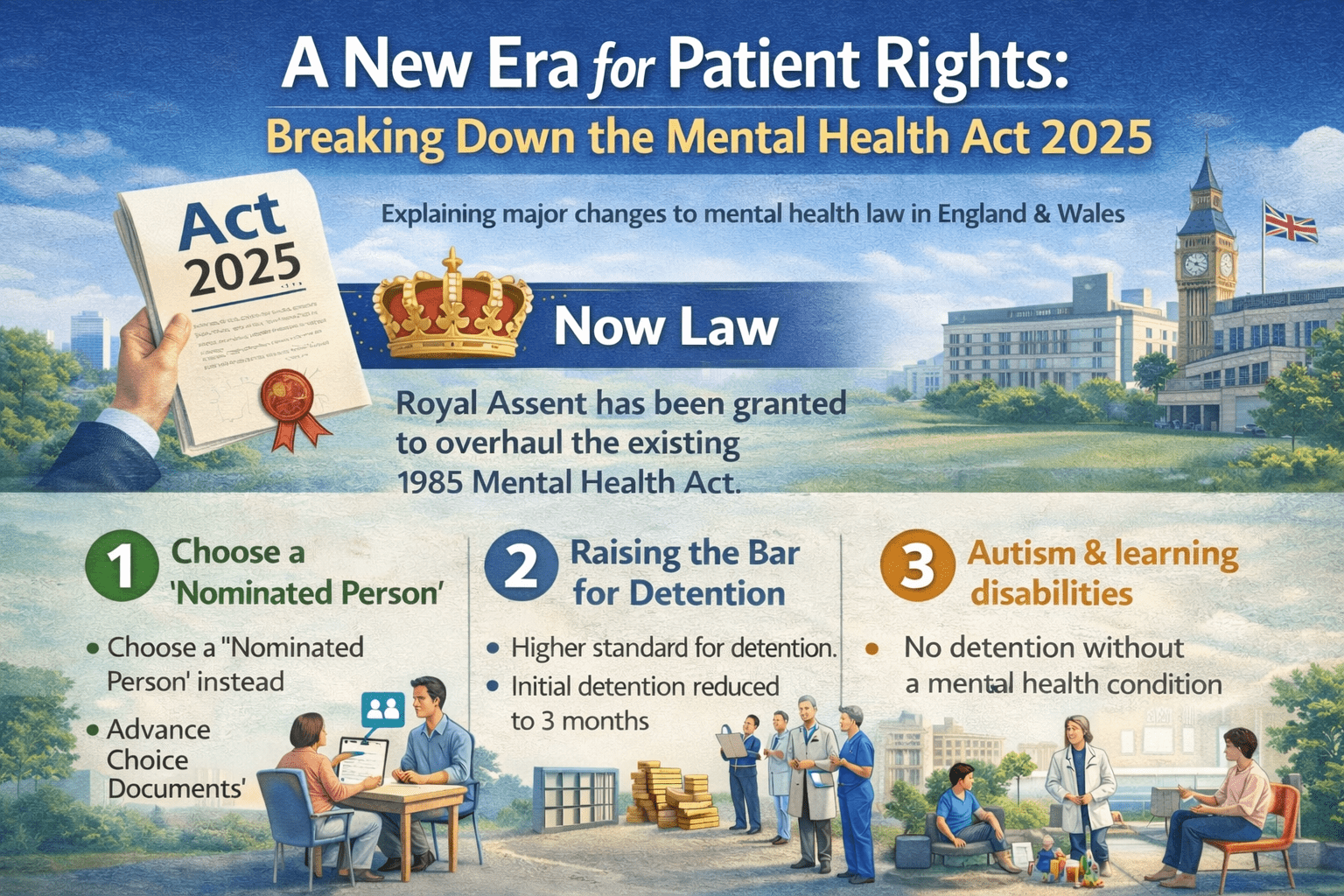
The legal landscape for mental health in England and Wales has just shifted. With Royal Assent now granted, the Mental Health Act 2025 is officially law—but what does it actually mean for patients, families, and healthcare providers?
After years of debate and advocacy, the 1983 Mental Health Act is getting its most significant overhaul in decades. While the 1983 Act remains the “parent” legislation, the 2025 amendments introduce a wave of changes designed to give patients more autonomy and ensure that hospital detention is a last resort rather than a default.
The “Big Bang” or a Slow Burn?
Don’t expect the entire system to change overnight. While the Act is now law, the government is taking a phased approach to implementation.
- February 18, 2026: The first minor changes kick in. These primarily affect “restricted patients” (those involved in the criminal justice system), allowing them to be discharged into the community under specific conditions that were previously blocked by legal red tape.
- The Long Road Ahead: Most of the headline-grabbing changes won’t be fully active for another two to ten years. The delay is down to the massive task of retraining staff, writing a new “Code of Practice,” and securing the necessary funding.
Three Pillars of Change: What’s Different?
1. Putting the Power in Patient Hands The Act replaces the old “Nearest Relative” system with a “Nominated Person.” This allows patients to choose exactly who they want representing their interests. Furthermore, “Advance Choice Documents” will allow individuals to state their treatment preferences while they are well, ensuring their voice is heard even during a crisis.
2. Raising the Bar for Detention Under the old rules, someone could be detained if it was “necessary for their health or safety.” The 2025 Act tightens this significantly. Now, there must be a risk of “serious harm” to the patient or others. Additionally, initial detention periods are being slashed from six months to just three, forcing more frequent reviews of a patient’s status.
3. Rethinking Autism and Learning Disabilities In a major victory for campaigners, the Act changes how people with learning disabilities or autism are treated. The goal is to stop these individuals from being “stuck” in mental health hospitals when they don’t have a co-occurring mental health condition, focusing instead on community-based support.
The Challenge for the Frontline
For the NHS and social care providers, the message is clear: start preparing, but don’t panic. Hempsons experts highlight that while the full rollout is years away, the shift toward “patient choice” requires a cultural change that needs to begin now.
The biggest hurdles remain resources and a lack of a firm timeline for the more complex parts of the Act. For now, the legal world is watching closely as the first set of provisions goes live this February.
Source