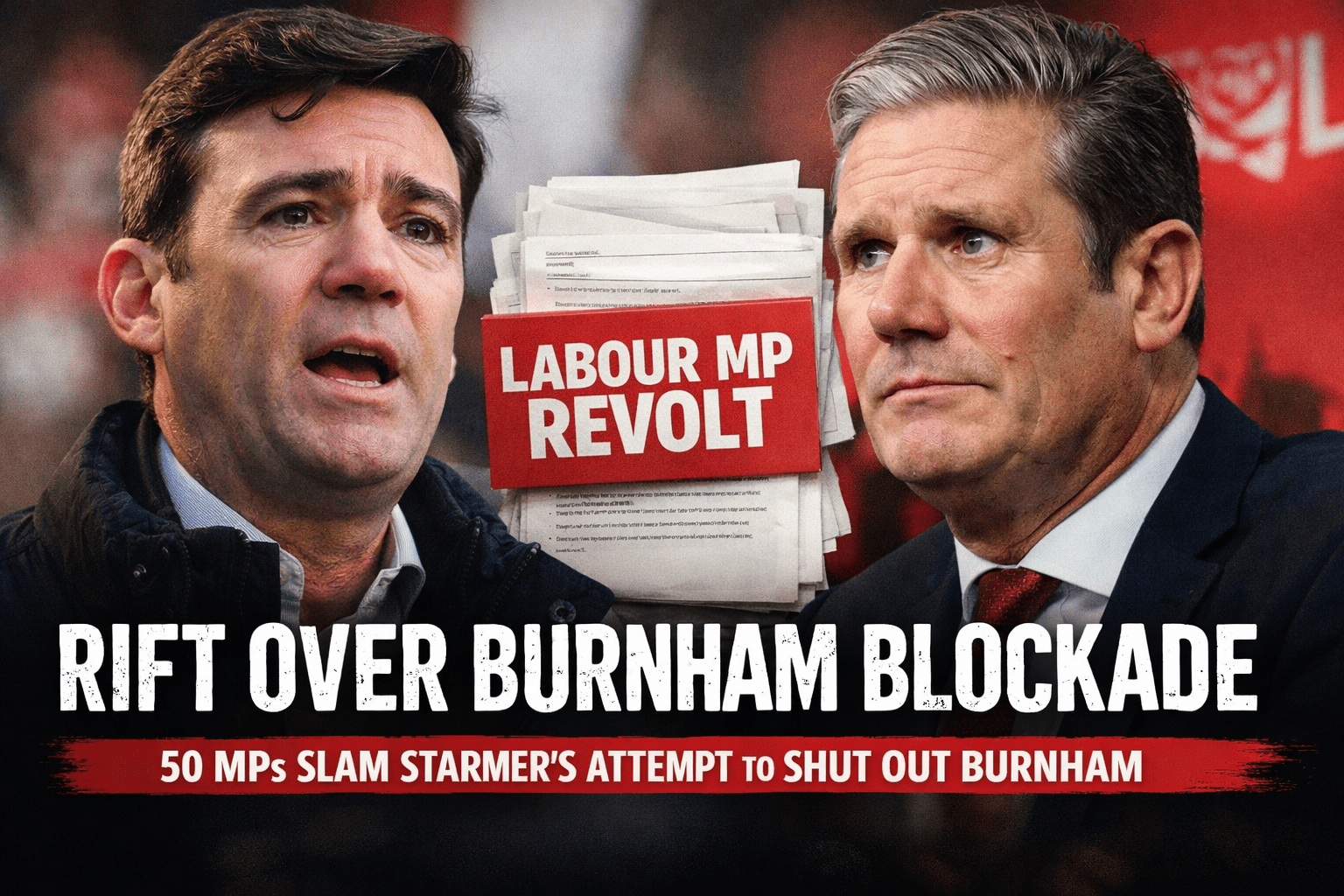
…escalating internal pressure on Sir Keir Starmer and exposing deepening unease over the party leadership’s increasingly centralised control.
The unusually large intervention by backbenchers and senior figures alike represents one of the most overt challenges to Starmer’s authority since he became Labour leader. At its core is a growing concern that decisions about candidate selection are being driven less by local democracy and more by tight command from the party centre.
Andy Burnham, the former Labour health secretary and current Mayor of Greater Manchester, remains one of the party’s most recognisable and electorally tested figures. Blocking him from standing has therefore raised eyebrows not just within Labour, but across the wider political landscape. Supporters argue that excluding a high-profile, experienced politician from a winnable contest risks appearing both petty and strategically short-sighted.
According to MPs who signed the letter, the decision to bar Burnham was taken with little explanation and minimal transparency. Several have privately warned that such moves reinforce perceptions of a leadership intolerant of dissent and overly focused on message discipline at the expense of internal debate.
In their letter, signatories urge the leadership to reverse course, warning that the decision undermines Labour’s stated commitment to democratic renewal. One MP described the move as “completely at odds with the values we claim to stand for”, adding that it risked alienating both party members and floating voters.
Starmer’s allies insist that tighter control over selections is necessary if Labour is to avoid past mistakes and present itself as a credible government-in-waiting. Since taking over the leadership, Starmer has overseen the exclusion or sidelining of several figures associated with internal factionalism, arguing that unity and discipline are essential ahead of a general election.
Yet critics within the party argue that the Burnham episode illustrates the dangers of overreach. They warn that attempting to manage internal politics through bans and blocks risks breeding resentment, particularly when it involves figures with strong public recognition and a proven electoral record.
A Labour source declined to comment directly on the letter but reiterated that the party operates “clear and robust selection procedures”. However, the scale of the backlash suggests that reassurance alone may not be enough to quell discontent.
The dispute comes at a delicate moment for Labour. While the party continues to lead in opinion polls, Starmer’s leadership style has increasingly come under scrutiny. Critics argue that his emphasis on control and caution may blunt Labour’s appeal by projecting managerial competence at the expense of political conviction.
For some MPs, the issue is not simply about Andy Burnham, but about the direction of the party itself. “This is about whether Labour trusts its members and its representatives,” one signatory said. “If we don’t, then we risk becoming disconnected from the very people we need to win elections.”
Whether the pressure will force a change of course remains uncertain. But with nearly 50 MPs now publicly challenging the leadership, the row is unlikely to fade quietly. Instead, it sharpens a broader question facing Labour as it edges closer to power: how much control is too much, and at what cost to the party’s democratic credibility?