England’s education secretary has set out a strong new position on mobile phones in schools, urging headteachers to ensure that pupils are not permitted to use their devices at any point during the school day — including in lessons, between classes, or during breaks. The drive marks a significant policy shift as the government seeks to reduce distractions in classrooms and strengthen enforcement of behaviour expectations across all state schools.
In a letter to headteachers sent on 26 January, Bridget Phillipson made clear that the government’s updated guidance expects all schools in England to be “phone-free environments”. This goes beyond simply restricting use in lessons: pupils should not have access to their mobile phones at any point, including at break or lunchtime. The advice also states that using phones as calculators or for quick online research is no longer considered appropriate during the school day.
The government’s revised position builds on guidance issued earlier in January, which emphasised the importance of consistent phone policies in schools. While most schools already have formal rules on mobile phone use, enforcement has been uneven, with reports suggesting that many pupils still access their devices without permission. Data referenced in government briefings indicates that almost all primary schools and around nine out of ten secondary schools have a phone policy in place, yet many students continue to use devices during class time.
Under the strengthened expectations, the schools watchdog Ofsted will, for the first time, explicitly consider how schools’ mobile phone policies are implemented when inspecting behaviour and attitudes. From April, inspectors will ask school leaders about their approach to phone use, assess how well policies are communicated to staff, pupils and parents, and evaluate the consistency of enforcement. This marks a shift from previous practice, where mobile phone rules were largely a matter for individual schools to decide.
The Department for Science, Innovation and Technology (DSIT) has also signalled that it will take parallel action on children’s social media use, acknowledging concerns about the impact of online platforms on young people’s wellbeing. Ministers have launched a national consultation on how best to address children’s digital engagement, including whether to adopt measures similar to Australia’s recent ban on social media use for under-16s. Options under consideration include raising the digital age of consent and restricting addictive design features in apps. Government officials are expected to review international evidence over coming months and respond to the consultation later in the year.
The new mobile phone expectations have drawn a mixed response. Many parents and school leaders have welcomed the clearer messaging and firm stance on reducing classroom disruption. Proponents argue that removing phones from the school environment helps pupils focus on learning, improves behaviour, and encourages healthier social interaction during the school day. Evidence from schools with existing phone bans often reports reductions in distraction and fewer behaviour incidents linked to device use.
However, some education professionals caution that guidance alone may not be enough to change entrenched habits. Paul Whiteman, general secretary of the National Association of Head Teachers, told the BBC that headteachers need practical support from government rather than the threat of tougher inspections, especially where enforcement might be difficult or divisive. Critics also point out that simply banning phones does not address wider issues around screen time or pupils’ broader online behaviour outside school hours.
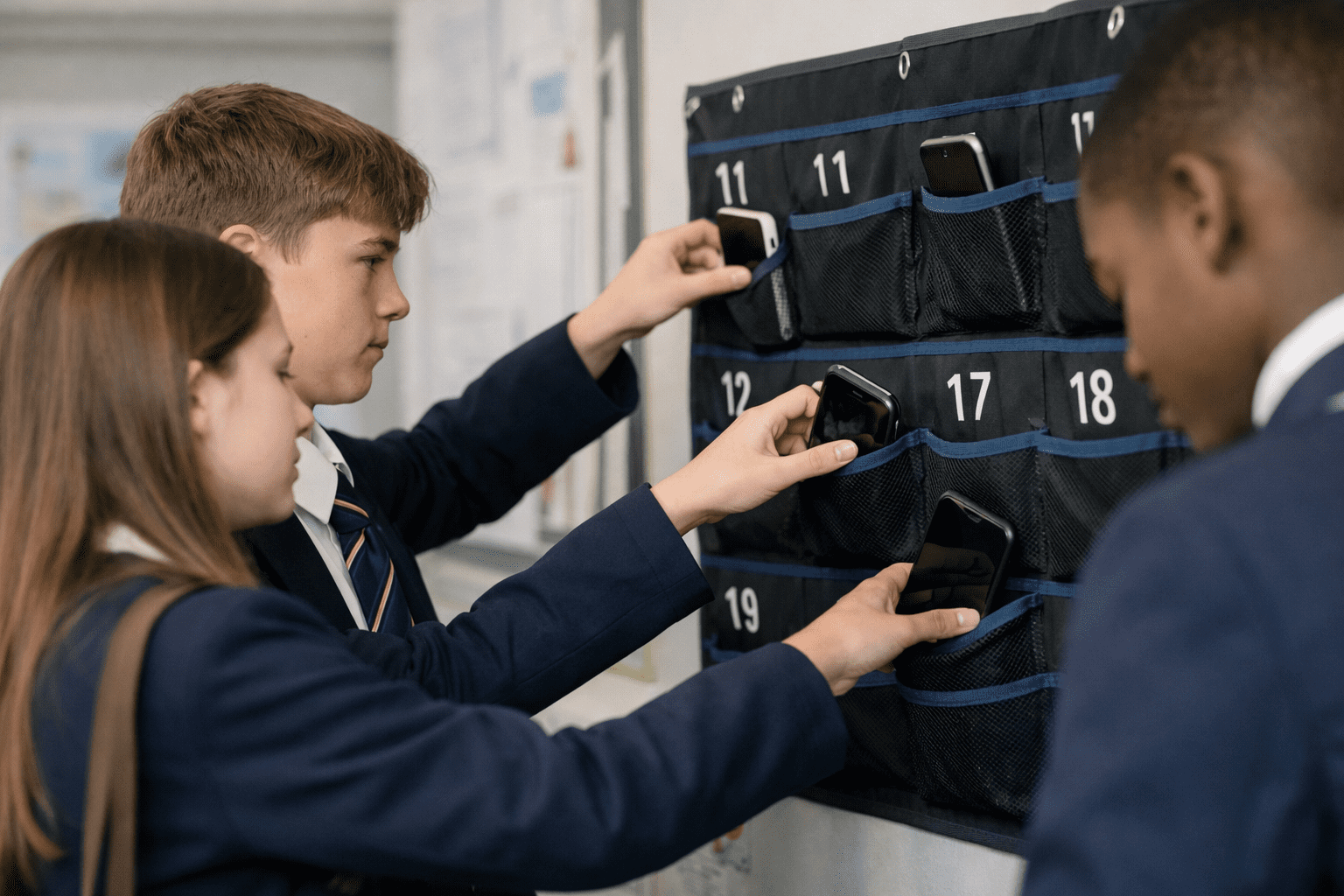
There are also practical questions about how schools should manage devices securely throughout the day and whether additional resources will be needed to support storage and supervision. Some schools have experimented with solutions such as locked pouches or central collection points to keep devices out of sight, but these approaches have not been universally adopted.
Despite these challenges, the government’s stance is clear: mobile phones should have no place in the school day, and schools are expected to apply this approach consistently unless there are compelling reasons not to. Ofsted’s involvement in evaluating implementation will likely increase the pressure on schools to align with the policy, and the ongoing national conversation about social media and children’s wellbeing suggests education ministers see this as part of a broader strategy to improve learning environments and protect young people’s mental health.
Source: based on “Schools in England should be phone-free all day, education secretary says”, The Guardian, 26 January 2026.