
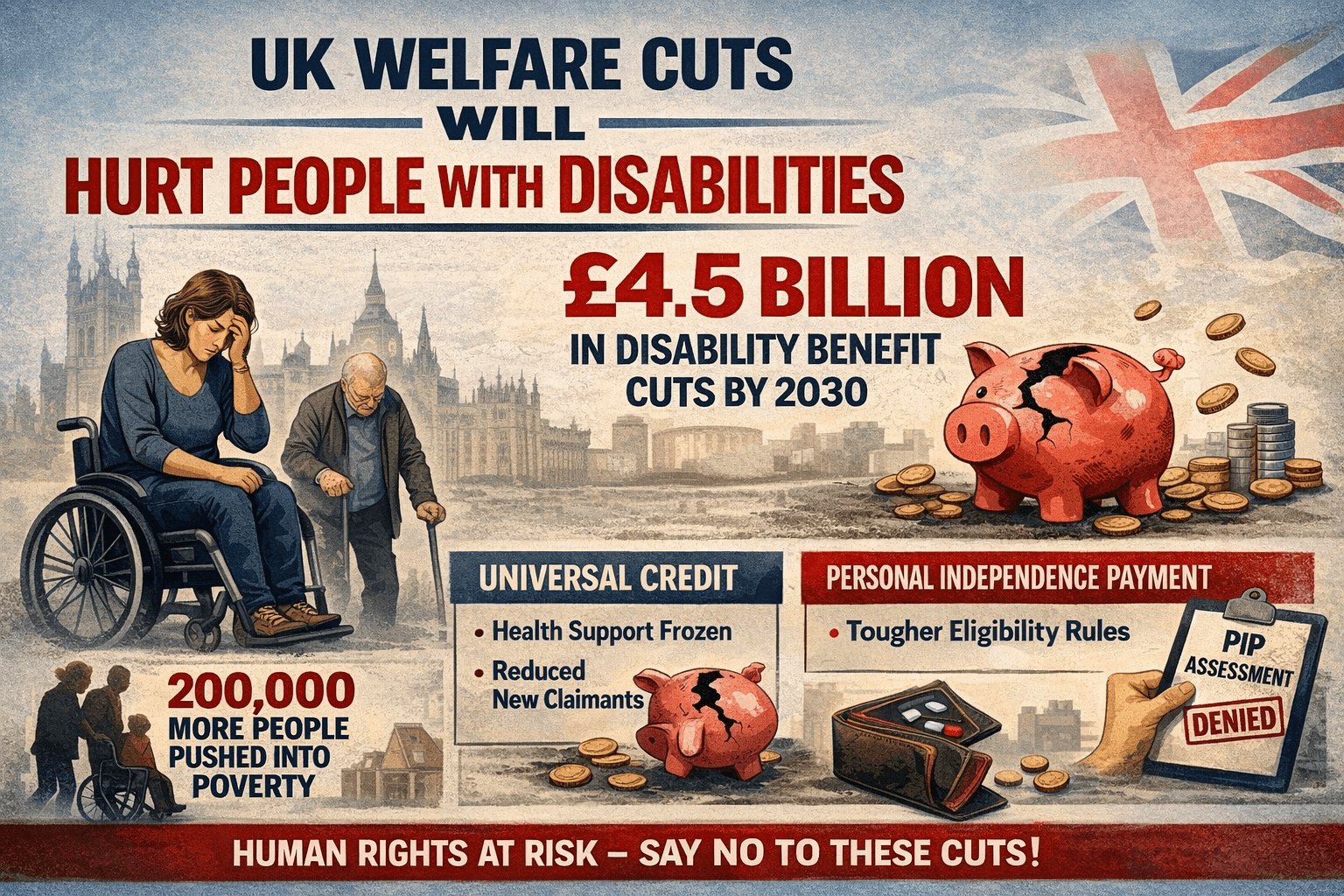
Human Rights Watch criticises draft UK legislation intended to “reform” major elements of the social security system, saying that although the government claims the changes will safeguard vulnerable people, in reality they would significantly undermine the rights and wellbeing of people with disabilities. The proposed bill would cut around £4.5 billion from disability-related support by 2030 and reduce key disability income.
Under the plans, additional health-related support included in Universal Credit—designed to help people with long-term health conditions or disabilities—would be frozen until 2030, with new claimants receiving only half of this extra amount, even though the basic Universal Credit rate would increase. Rates of another longstanding disability benefit for people with limited capability to work would also be frozen.
The bill would also make it harder to qualify for the daily living component of the Personal Independence Payment (PIP), tightening the eligibility test despite existing concerns that the current assessment already treats people’s capabilities in a demeaning way. This change could leave many people without vital support.
The government’s own analysis suggests that up to 800,000 people might lose PIP eligibility and that the changes could push an additional 200,000 people — including children — into poverty by 2030. Charities such as Citizens Advice, the Joseph Rowntree Foundation and disability rights groups warn that this reduction in support will deepen hardship for disabled people and their families.
While ministers say the most severely disabled and those nearing the end of life will be protected from losing full benefits, HRW argues that the plans nonetheless threaten basic rights, including the right to social security and dignity. It urges lawmakers to reject the legislation, saying that budget savings should not come at the expense of people with disabilities.








Have your say!