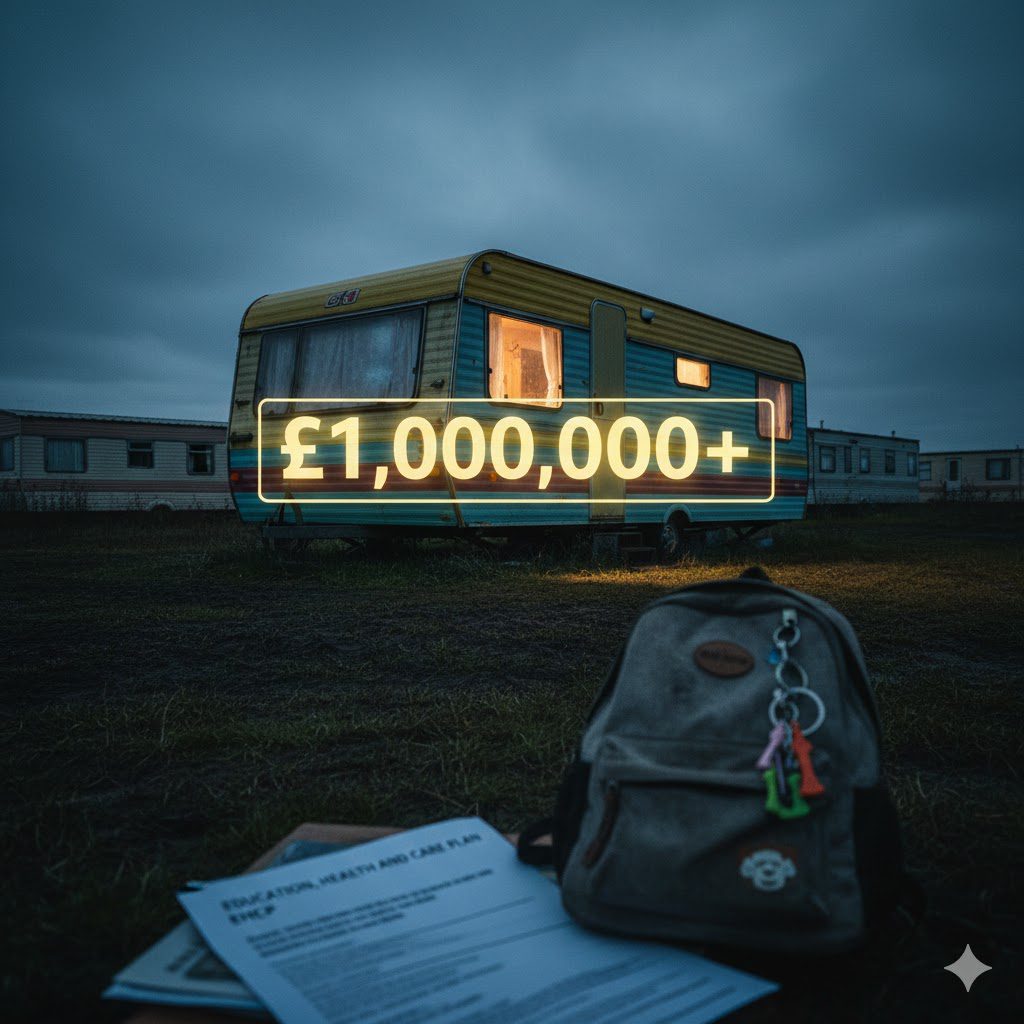
A shocking new report from Children’s Commissioner Dame Rachel de Souza has revealed that 36 vulnerable children in England are currently in individual care placements costing over £1 million per year—most of them in illegal, unregistered settings.
The report, released on January 11, 2026, paints a grim picture of a “broken” children’s social care market. It found that while the total number of children in illegal placements has slightly dipped, the severity and cost of these cases have reached unprecedented levels.
The Rise of “Crisis” Accommodation
According to the data, local authorities across England spent an estimated £353 million over the last 12 months on illegal children’s homes. These settings are frequently entirely unsuitable for the complex needs of the children they house, including:
- Caravans and Holiday Camps: One child was reportedly kept in a holiday camp for nearly nine months.
- AirBnBs and Short-term Rentals: Often used when no registered beds are available.
- Houseboats and Narrowboats: Used as “last resort” emergency accommodation.
The average weekly cost for these placements is £10,500 per child—equivalent to over half a million pounds a year. However, for the 36 “million-pound” children, the costs are driven even higher by extreme staffing ratios, sometimes requiring five staff members to look after a single child 24/7.
The SEND Connection: “Inclusion” is Failing
Perhaps most relevant to your readers is the high prevalence of SEND requirements among these children. The Commissioner’s data confirms that:
- Nearly 60% of children in illegal placements have an Education, Health and Care Plan (EHCP).
- Over 33% are currently receiving support from CAMHS (Child and Adolescent Mental Health Services).
Dame Rachel de Souza stated: “This is what failure looks like in children’s services: when a lack of good options is what dictates the quality of care given to a child with complex needs.”
Why are Costs Spiralling?
The report identifies “predatory” private providers as a major factor. While councils are legally obliged to house these children, private equity-backed firms have recognized that councils have “no other choice” but to pay whatever rate is demanded.
- 89% of these illegal settings are run by private companies.
- 61% of children are placed outside their local authority boundary, often hundreds of miles away from family and support networks.
What’s Next?
The government’s Children’s Wellbeing and Schools Bill, currently moving through Parliament, aims to grant Ofsted new powers to issue civil penalties and fines to companies operating unregistered homes. However, the Commissioner warns that without a massive increase in the number of legal, registered beds, councils will remain trapped in this “million-pound” cycle.
Website Sidebar: The 2026 Crisis in Numbers
- Total Spend: £353 million on illegal homes in 2025.
- Top Tier: 36 children in placements costing £1m+ per year.
- The Gap: 56% of these children are boys; most are aged 10-17.
- The Danger: 30% of children in these homes went missing at least once in the last year.
“Read More: How one company used this crisis to collect £12m while children slept on floors.”