Government Proposes Major SEND Reform: EHCPs Reserved for Children with the Most Complex Needs
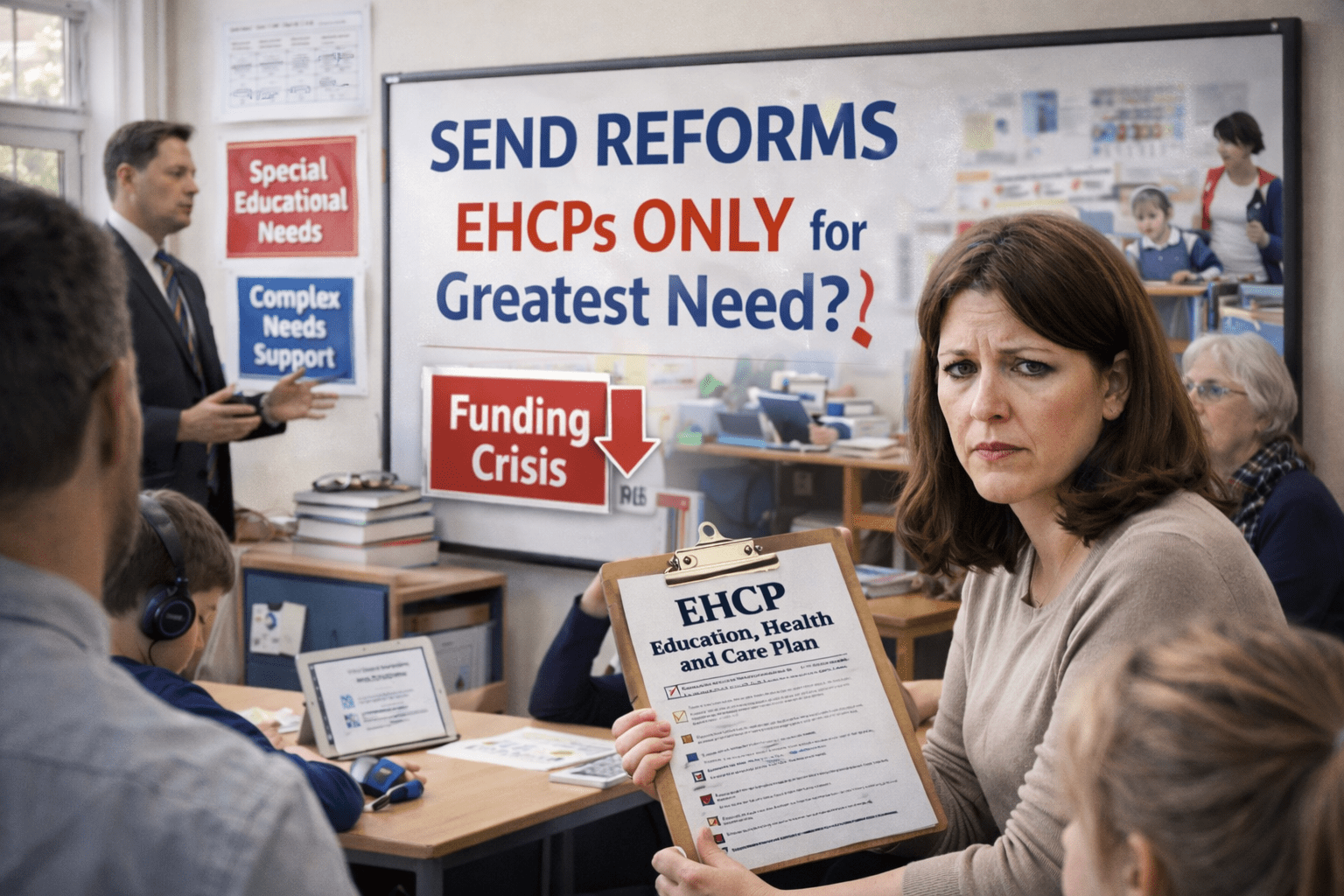
The UK government is moving forward with a substantial overhaul of the special educational needs and disabilities (SEND) system in England, proposing that Education, Health and Care Plans (EHCPs) should be available only to pupils with the most severe and complex needs, rather than being offered to all children who currently qualify under the existing criteria. This potential shift reflects mounting pressure on resources, increasing demand and political resistance within Westminster and among campaigning organisations. (Netmums)
EHCPs are statutory documents that set out the education, health and social care provisions a child or young person with SEND needs in order to thrive in school and in life, and they have been a core component of England’s SEND framework since 2014. Traditionally, EHCPs have guaranteed legally enforceable support for those whose needs cannot be met through standard SEN Support in mainstream settings. But recent government planning suggests that eligibility could be significantly narrowed. (House of Commons Library)
Under the proposed four-tier assessment model reportedly being considered, EHCPs would be retained only for children whose needs are greater than the highest tier of need. In this system, other pupils with SEND might receive different forms of support, such as support passports — digital records outlining a child’s requirements — and funding allocated to groups of schools rather than to individual children. (Netmums)
Drivers of Reform: Rising Costs and Demand
The government’s focus on restricting EHCP eligibility is driven in part by the rapid growth in the number of plans and pressure on public finances. Data from recent years show that approximately 1.7 million pupils in England are now identified with SEND, with around half a million having active EHCPs — an increase of well over 100% since 2014. Local authorities face steep rises in the cost of SEND provision, prompting ministers to consider whether the current approach is sustainable in the long term. (House of Commons Library)
Recent analysis from the Institute for Fiscal Studies (IFS) underscored that SEND education spending is on course to double between 2015 and 2028, creating significant pressures on school budgets and local authority finances, particularly if the rate of EHCP issuance continues unabated. The IFS report noted that limiting EHCP access could help slow spending growth, but warned that such changes may not deliver immediate savings and could reduce support for children in need. (The Guardian)
Changing Structure: Tiered Support System
Under the proposed reform, children with SEND might be assessed and supported through a tiered framework rather than the current binary system of SEN Support versus EHCP. For example, a child whose needs are primarily educational might receive an education plan, while those with additional health needs could have education and health plans — but only those whose needs span across education, health and care sectors would retain full EHCPs. (Schools Week)
This approach is partly inspired by efforts to streamline support and reduce the administrative and financial burden of the current system. Proponents argue that a tiered model with clearer thresholds could help schools and local authorities target resources more efficiently and encourage early intervention before a child’s needs escalate to requiring a full plan. (Schools Week)
Controversy and Political Debate
However, the proposed reforms have sparked intensive debate among parents, campaign groups and some politicians, who warn that tightening EHCP eligibility could weaken the legal rights that families have fought hard to secure. EHCPs confer statutory entitlements to specific educational accommodations and services, and critics argue that narrowing access would leave many children without enforceable support. (Institute for Government)
Campaigners have raised concerns that, beyond financial considerations, any move to restrict EHCPs risks undermining the principle that children with SEND should receive support tailored to their individual needs, regardless of severity. Organisations such as the Independent Provider of Special Education Advice (IPSEA) have stressed that existing law already requires schools and local authorities to provide appropriate education for children with SEND, and that reform should strengthen those rights rather than weaken them. (ipsea.org.uk)
Parliamentary scrutiny has also intensified, with some MPs from all parties arguing that the reforms need to protect parental rights to appeal and ensure that children currently holding EHCPs do not lose support they have relied upon for years. The government’s upcoming Schools White Paper — repeatedly delayed, now expected in 2026 — is anticipated to set out detailed plans and respond to this pushback. (Financial Times)
Delayed Implementation and Ongoing Review
Amid the controversy, the government has signalled that key components of SEND reform may be pushed back until after the next general election (expected by 2029), reflecting both the complexity of the issue and political sensitivity around altering the legal entitlements of vulnerable children and their families. (Financial Times)
Ministers maintain that the planned reforms aim not to remove effective support but to make the system fairer, more consistent and sustainable as demand and costs continue to rise. They argue that a more nuanced approach could help schools deliver inclusive education within constrained budgets and short supply of specialist staff. (Institute for Government)
Conclusion
The debate over EHCP reform in England reflects broader tensions within education policy: balancing rising costs and demand against the need to protect legal rights and ensure inclusive support for children with SEND. While government proposals to limit EHCPs to those with the greatest needs are driven by fiscal pressures and a desire to streamline support, campaigners and many professionals insist that any changes must preserve the core entitlements that underpin the current SEND framework.
If you’d like this reformatted for publication or social media with headline + subheadings, I can produce that version too.