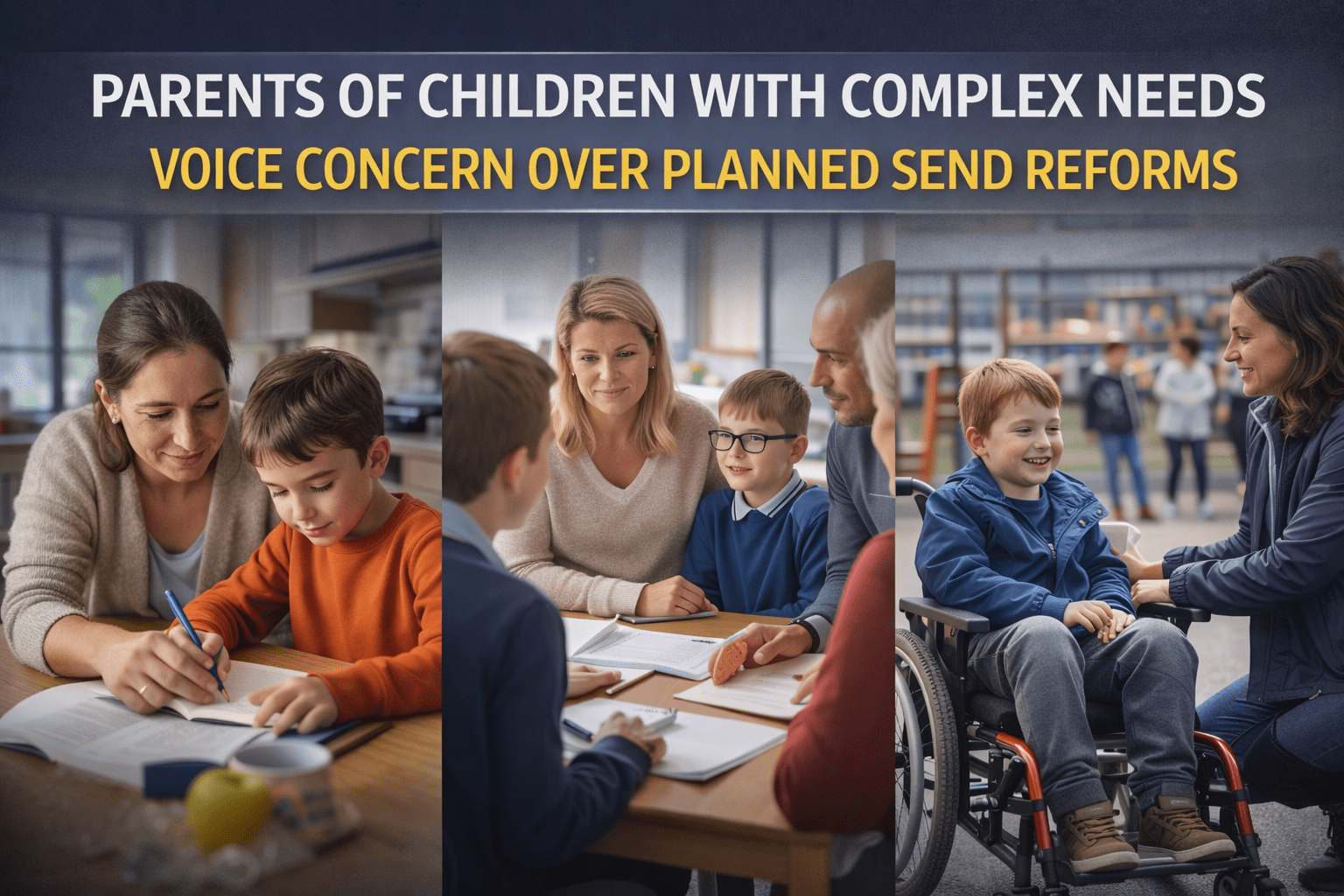
Nearly half of parents of children with complex needs say they fear their child could lose vital support under proposed special educational needs and disabilities (SEND) reforms in England, according to a new survey.
The poll of 1,000 parents found widespread anxiety about the direction of policy changes, with 45 per cent worried essential assistance could be reduced or withdrawn, and around half saying they feel nervous about what the reforms will mean for their families.
Support at risk
Families of children with conditions including autism, deaf-blindness and physical impairments often rely on tailored provision such as specialist teaching, therapy services, transport help and one-to-one classroom support.
Many respondents said even small reductions could have significant consequences for learning, wellbeing and independence.
Parents reported concerns that tighter eligibility criteria or funding changes might make it harder to secure Education, Health and Care Plans (EHCPs) or maintain existing support packages.
Uncertainty and anxiety
Beyond the potential loss of services, the survey highlighted emotional strain. Around half of parents described feeling uncertain or apprehensive about navigating the reforms, with some saying they feared lengthy reassessments or increased bureaucracy.
Several noted that clarity about how changes would be implemented remains limited, making it difficult to plan ahead.
Calls for reassurance
Advocates say any reform must protect the most vulnerable pupils and ensure that families are properly consulted before decisions are finalised. Education charities have urged policymakers to guarantee that children with higher needs do not face disruption during transitions.
Campaigners argue that consistent, early support not only benefits children and families, but can also reduce longer-term costs for schools and local authorities.
Next steps
Ministers have said the aim of SEND reform is to improve consistency and outcomes across the system. However, parents and professionals alike are calling for clearer safeguards and communication as proposals move forward.
Source: Parent survey of 1,000 families
Published by Notherelong.