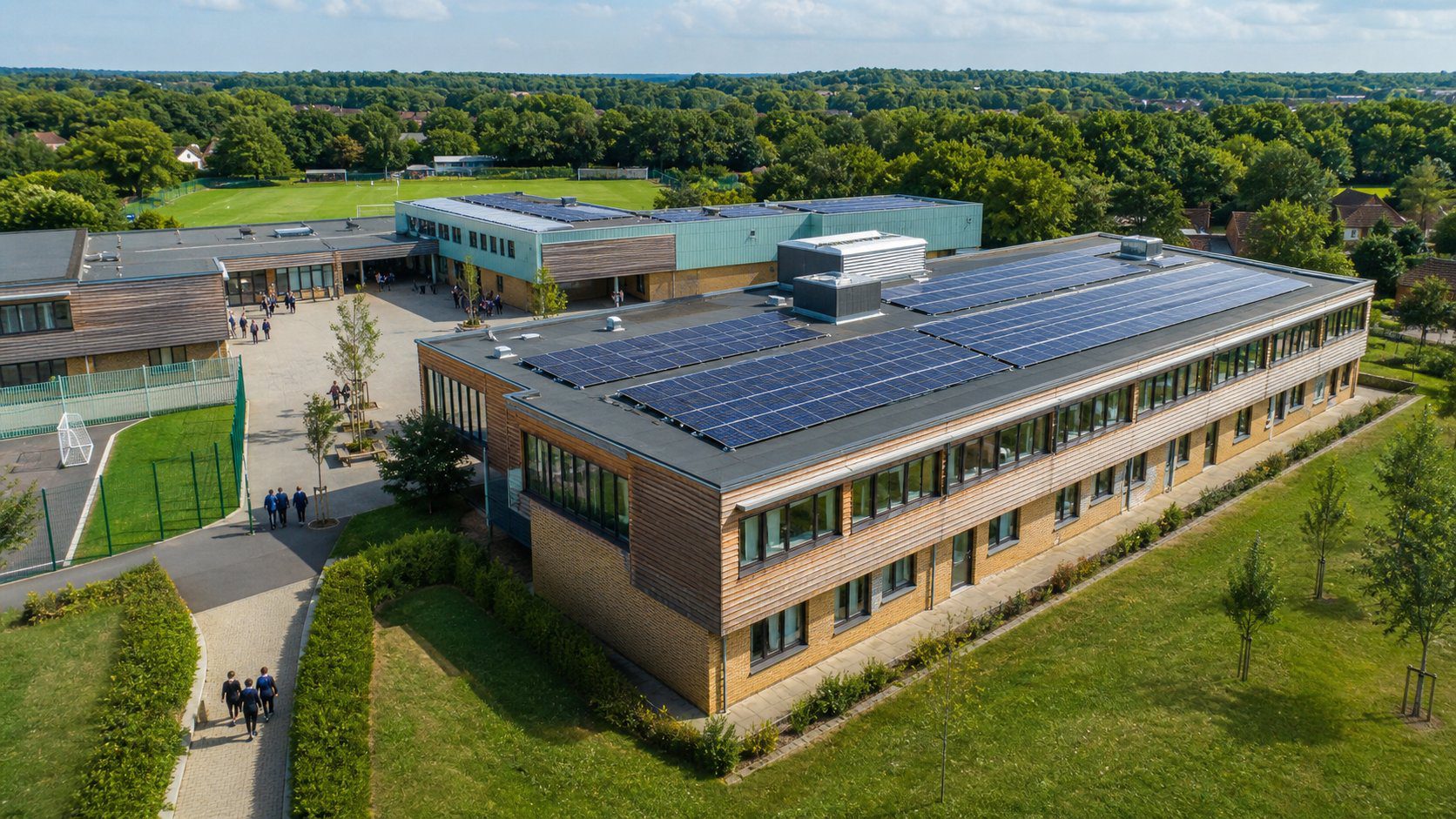
Hundreds more schools and colleges are joining the government-backed solar programme, with ministers estimating that participating settings could save £220 million on energy bills over the lifetime of the panels.
What has been announced?
The Department for Education says 245 schools and colleges already have government-funded solar panels. A further 100 settings are being added to the Great British Energy Solar Partnership, supported by up to £40 million.
The pilot is intended to inform a national rollout in 2027 and 2028, with the stated ambition of eventually making solar accessible to every school and college in England.
Why the savings matter
Energy costs compete directly with staffing, learning materials, building maintenance and pastoral services. Stable on-site generation could make budgets more predictable while reducing emissions. The gains will vary, however, according to roof condition, location, electricity use and maintenance arrangements.
Questions governors should ask
- Who owns and maintains the equipment?
- How are projected savings calculated?
- Will roofs need reinforcement or replacement first?
- How will performance be monitored and reported?
- Can battery storage improve the value of daytime generation?
The strongest case for the programme is practical rather than symbolic: lower recurring costs can release money for education. Transparent performance data from the pilot will show whether that promise is being delivered consistently.
Source: Department for Education and Department for Energy Security and Net Zero, 16 July 2026.