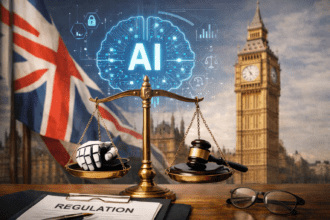
The UK public sector is increasingly deploying Artificial Intelligence (AI) systems across diverse services, from healthcare diagnostics to welfare administration, aiming to enhance efficiency and service delivery. However, this burgeoning adoption raises significant concerns regarding algorithmic bias, transparency, accountability, and the potential impact on citizens’ fundamental rights, prompting an urgent need for robust ethical frameworks and oversight.
The AI Imperative in Public Services
The UK government’s drive for digital transformation has placed AI at the forefront of public service modernisation. AI’s potential for sophisticated data analysis, predictive capabilities, and automation offers a compelling vision for improved efficiency and resource allocation within constrained public services.
While various bodies like the Centre for Data Ethics and Innovation (CDEI) and the Information Commissioner’s Office (ICO) have issued guidance, a specific statutory framework for public sector AI remains absent. This non-statutory approach relies on existing legislation, creating a landscape where the promise of innovation must be carefully balanced against the peril of unintended consequences.
The Promise: Efficiency and Enhanced Service Delivery
Public bodies are exploring and implementing AI across a spectrum of services. In healthcare, AI assists with diagnostics, optimises patient flow, and helps allocate resources more effectively within the NHS.
The Department for Work and Pensions (DWP) uses AI for fraud detection and to streamline benefit processing. Local councils deploy AI for predictive maintenance of infrastructure, optimising waste collection routes, and even assisting with early identification for social care referrals.
These applications aim to deliver faster, more accurate decisions, free up human staff for complex cases, and ultimately lead to more effective and responsive public services for citizens.
The Peril: Ethical Minefields and Societal Impact
Despite the benefits, the rapid adoption of AI in sensitive public services presents significant ethical and societal challenges.
A primary concern is algorithmic bias, where historical data, often reflecting existing societal inequalities, can lead AI systems to perpetuate or even amplify discrimination. This risk is particularly acute in areas like welfare decisions, criminal justice, and public sector recruitment, potentially leading to unfair or unequal treatment.
The ‘black box problem’ refers to the lack of transparency in how many AI systems arrive at their decisions. This opacity makes it difficult for individuals to understand or challenge outcomes, hindering due process and eroding trust in public institutions.
An accountability gap also emerges: when an AI system makes a harmful or incorrect decision, determining responsibility among public bodies, developers, and data providers becomes complex. This challenge underscores the need for clear lines of accountability.
Furthermore, the extensive data collection required for AI systems raises significant data protection and privacy concerns, including the potential for misuse, re-identification risks, and breaches of personal information. The implications for human rights, particularly the right to explanation, non-discrimination, and equal access to essential services, are profound and require careful consideration under the Equality Act.
Navigating the Regulatory Labyrinth and Oversight Challenges
The UK’s current approach to AI regulation in the public sector is largely non-statutory, relying on existing legal frameworks like the General Data Protection Regulation (GDPR) and the Equality Act 2010, alongside guidance from sectoral regulators such as the ICO.
The CDEI provides expert advice and recommendations, advocating for ethical AI use, but lacks direct enforcement powers. The Open Government Partnership (OGP) has also highlighted the importance of transparency in public sector AI deployments.
There is a growing call for more robust model governance standards and mandatory algorithmic transparency requirements. Ensuring effective accountability and oversight remains a significant challenge, as policy makers seek to foster innovation without compromising fundamental rights and public trust.
Implications: For Citizens, Providers, and Policy Makers
For citizens, the increasing use of AI in public services carries the risk of reduced agency, potentially unfair or opaque decisions, and a gradual erosion of trust in the institutions meant to serve them. Clear complaint routes and avenues for redress are crucial.
Public service providers must develop robust internal governance frameworks, invest in staff training on AI ethics, and conduct thorough ethical impact assessments before deployment. This proactive approach is essential for responsible innovation.
For policy makers, the urgency to develop clearer, enforceable guidelines is paramount. The ongoing debate centres on balancing AI safety with the drive for innovation. Future policy is likely to focus on specific statutory duties, enhanced regulatory powers, and a stronger emphasis on public engagement and co-design to ensure AI truly serves the public good.
The journey towards truly ethical and accountable public sector AI in the UK is complex and ongoing, demanding continuous scrutiny and adaptation to emerging technologies and societal expectations.
Source: Notherelong analysis.
Published by Notherelong.