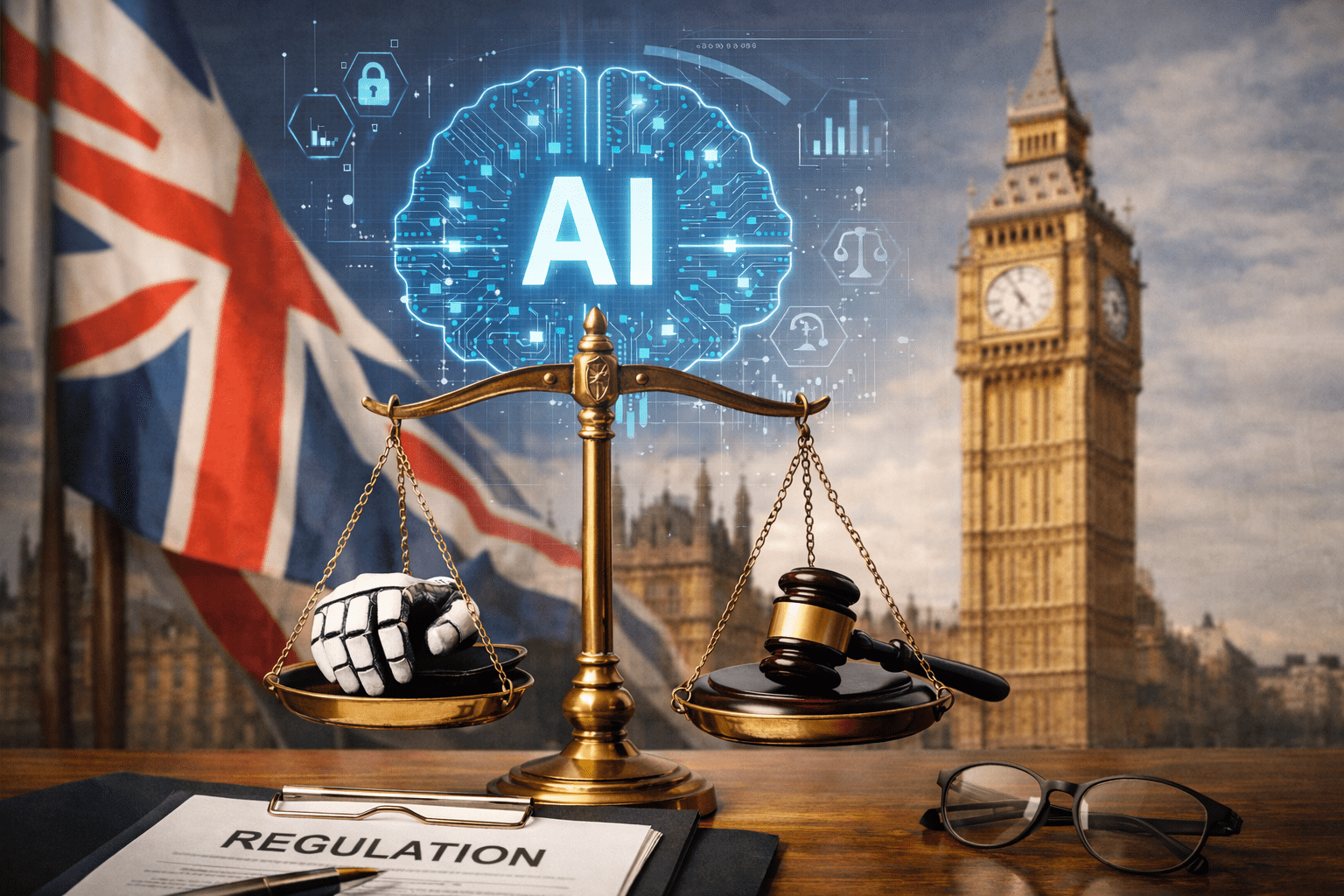
Britain’s sector regulators are sharpening their approach to artificial intelligence, signalling a shift from voluntary guidance to more formal expectations around safety, accountability and transparency.
What happened
UK regulators responsible for competition, privacy, financial conduct and communications have set out updated expectations for how artificial intelligence systems should be designed and deployed across the economy. The guidance focuses on risk management, explainability and consumer protection rather than creating a single new AI law.
Instead of establishing a central regulator, the government’s approach asks existing watchdogs to enforce AI standards within their own sectors — from finance to healthcare to online platforms — using powers they already hold.
Why it matters
This marks a subtle but important change. For the past year, the UK has largely relied on voluntary principles and industry self-governance. Clearer expectations from regulators suggest enforcement is now becoming more likely, particularly where automated systems affect jobs, credit, access to services or personal data.
For businesses, this means AI can no longer be treated purely as an innovation opportunity. Governance, documentation and audit trails are quickly becoming standard practice. For the public, it offers stronger safeguards where algorithmic decisions carry real-world consequences.
What happens next
Regulators are expected to begin testing these expectations through investigations and casework over the coming year. Companies deploying high-risk systems may face closer scrutiny, especially around bias, safety testing and the ability to explain automated decisions.
Further legislation remains possible, but the immediate focus is likely to be practical enforcement rather than new headline laws.
The bigger picture
The UK is attempting to position itself between the more prescriptive regime emerging in the EU and the lighter-touch approach seen in the US. The challenge will be balancing innovation with trust. Without credible oversight, public confidence in AI systems — and the benefits they promise — may erode quickly.
Effective governance may prove less about slowing technology and more about ensuring it serves society in transparent and accountable ways.
In short:
- Regulators are clarifying how AI rules will be enforced across sectors
- Businesses face rising expectations around safety and accountability
- Oversight is shifting from voluntary guidance to practical enforcement
Published by Notherelong.