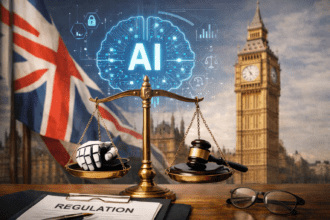
The UK government is actively progressing its distinctive pro-innovation approach to Artificial Intelligence (AI) regulation, with various sectoral regulators now developing and implementing practical guidance based on the March 2023 AI White Paper. This ongoing, non-statutory framework aims to harness AI’s benefits across diverse industries while addressing risks through existing regulatory bodies, signifying a crucial phase in establishing practical oversight across the UK’s economy and public services.
The UK’s Unique Regulatory Landscape for AI
The UK’s strategy for AI governance diverges significantly from the European Union’s more prescriptive AI Act. Instead of a single, overarching statutory body, the UK has opted for a flexible, principles-based framework, delegating primary responsibility for AI oversight to existing regulators. This approach, championed by the Department for Science, Innovation and Technology (DSIT), is designed to be adaptable to rapidly evolving AI technologies and foster innovation by avoiding rigid, sector-agnostic legislation. The core principles – safety, security and robustness; appropriate transparency and explainability; fairness; accountability and governance; and redress and contestability – are intended to guide regulators in applying their existing powers to AI-specific challenges within their domains.
This model reflects a deliberate choice to leverage the deep expertise of regulators already familiar with specific sector risks, from financial services to healthcare, ensuring that AI-related guidance is contextually relevant and effective. The government believes this will create a more agile regulatory environment that can respond to technological advancements without stifling growth. However, it also introduces the challenge of ensuring consistency and avoiding fragmentation across different sectors.
Sectoral Regulators Step Up
A key development has been the proactive engagement of various regulators in translating the White Paper’s principles into actionable guidance. Each body is assessing how AI impacts its specific remit and what adjustments or new interpretations of existing legislation are necessary.
The Information Commissioner’s Office (ICO), for instance, has been particularly active, focusing on the intersection of AI with data protection and privacy. Their guidance addresses issues such as algorithmic bias, the use of personal data in AI training, and the rights of individuals in automated decision-making. The ICO’s work is crucial for ensuring that AI systems developed and deployed in the UK comply with GDPR and the Data Protection Act.
The Competition and Markets Authority (CMA) continues its scrutiny of AI’s impact on market competition. Following its initial review, the CMA is actively monitoring the development of foundation models and their potential to create new forms of market power or anti-competitive practices. Their ongoing work aims to ensure fair competition and prevent abuses of dominance in the rapidly expanding AI sector.
Ofcom, the communications regulator, is also developing its approach, particularly concerning AI’s role in online safety and content moderation. With the Online Safety Act now in force, Ofcom is considering how AI-powered tools and platforms manage harmful content and protect users, including the implications for large language models and generative AI.
Other regulators are similarly engaged. The Health and Safety Executive (HSE) is exploring the safety implications of AI in industrial settings and the workplace, while financial regulators like the Financial Conduct Authority (FCA) and the Prudential Regulation Authority (PRA) are assessing AI’s role in financial services, risk management, and consumer protection. These diverse efforts highlight the pervasive nature of AI and the breadth of regulatory considerations.
Challenges and Opportunities for Coherence
While the sectoral approach offers flexibility and targeted expertise, it also presents coordination challenges. DSIT is tasked with ensuring a coherent overall framework, preventing regulatory gaps or overlaps, and fostering a shared understanding of the core AI principles. This involves continuous dialogue with regulators and stakeholders, and the development of cross-cutting guidance where necessary.
Industry stakeholders have largely welcomed the pro-innovation stance but have also voiced calls for greater clarity and consistency across different regulatory bodies. Businesses developing or deploying AI systems require predictable regulatory pathways to invest with confidence. The government’s ongoing engagement with industry and academia is vital to refine this framework and ensure its practical applicability.
The UK’s approach seeks to position itself as a global leader in responsible AI innovation. By demonstrating a flexible yet robust regulatory environment, the government aims to attract investment and talent, fostering a thriving AI ecosystem while mitigating risks effectively. This balance is critical for maintaining public trust in AI technologies.
Implications for Businesses and Public Services
For UK businesses, particularly SMEs and startups in the AI sector, the evolving regulatory landscape means a need for vigilance and adaptability. Understanding the specific guidance from relevant sectoral regulators will be paramount for compliance and risk management. While there isn’t a single “AI Act” to consult, firms must integrate AI principles into their governance structures and product development cycles, considering data protection, fairness, and safety from inception.
Public services, increasingly adopting AI for efficiency and improved citizen outcomes, also face heightened scrutiny. Agencies deploying AI must navigate guidance from bodies like the ICO to ensure transparency, accountability, and non-discriminatory application. This necessitates robust internal governance, impact assessments, and clear complaint routes for affected individuals.
Ultimately, the success of the UK’s sectoral AI regulation hinges on effective coordination, clear communication, and the willingness of regulators to adapt their established practices to new technological realities. The ongoing implementation will serve as a critical test of this unique regulatory model.
What to Watch Next
Looking ahead, several key developments bear watching. DSIT is expected to provide further updates on the overall progress of the framework and may launch additional consultations on cross-cutting issues. Regulators will continue to issue more detailed, sector-specific guidance, which will be crucial for practical implementation. There will also be ongoing parliamentary scrutiny of the framework’s effectiveness and its ability to keep pace with rapid AI advancements. The UK’s ability to align its unique approach with international standards, particularly with key trading partners, will also be a significant factor in its long-term success. The balance between fostering innovation and ensuring robust oversight remains a dynamic challenge that the UK government and its regulators will continue to navigate.
Source: UK Government (DSIT, ICO, CMA, Ofcom)
Published by Notherelong.