Expanded Detail
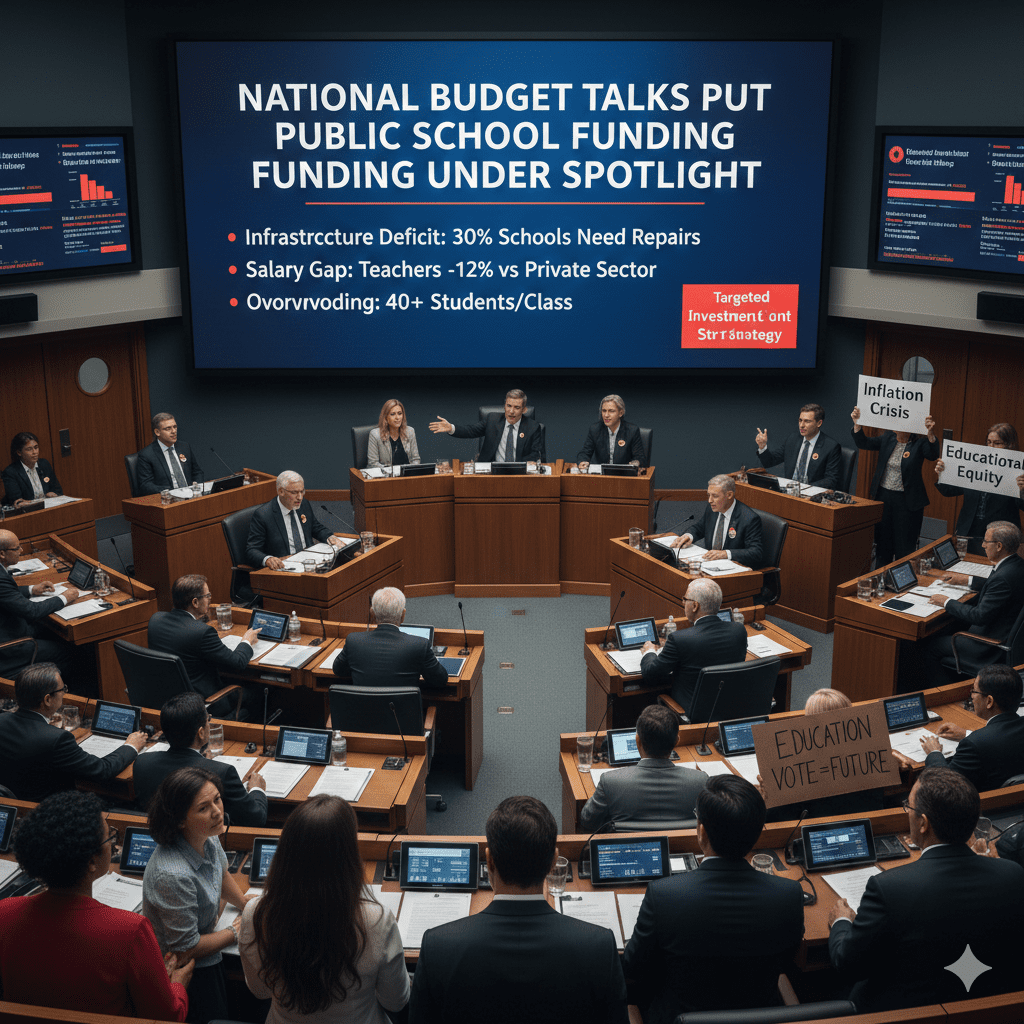
As lawmakers return to the capital, the debate over the national budget has shifted from general fiscal policy to a high-stakes standoff over educational equity. While the government’s “targeted investment” strategy aims to maintain fiscal discipline, opposition leaders argue that a “discretionary” approach to schooling ignores the compounding effects of inflation on classroom resources.
Key data points currently driving the negotiations include:
- Infrastructure Deficit: Estimates suggest that nearly 30% of public schools require urgent structural repairs, from roof leakages to outdated electrical systems.
- The “Salary Gap”: Teacher unions have presented data showing that educator pay has fallen 12% behind private-sector equivalents when adjusted for the current 2026 inflation rates.
- Overcrowding Metrics: In urban centers, some primary school classes now exceed 40 students per teacher, a ratio that analysts warn will lead to a significant drop in national literacy and numeracy scores by 2030.
The outcome of these talks is seen as a bellwether for the upcoming election cycle. If the finance committee holds its “measurable investment” line, critics fear it may alienate the “Education Vote”—a powerful demographic of parents and civil service employees who view school quality as a non-negotiable priority.
Original Article:Parliamentary Budget Office – Education Spending and National Development Report